
In this comprehensive 11-part sermon series review, you’ll discover a new form of premillennialism which utilizes tools such as the biblical calendar, Hebrew idioms, ancient near-eastern history, and comparative mythology to “unlock” prophetic codes that often seem like a foreign movie without subtitles to modern readers.
The material explores the dramatic climax of human history through the lens of biblical typology and geopolitical prophecy. It draws parallels between ancient events in Genesis—such as Noah’s Flood and the Tower of Babel—and the final unified systems of the end times, identifying the “Revived Roman Empire” (Kittim) as the primary global superpower. Central to this narrative is the distinction between human tribulations and divine wrath, the identification of the Antichrist as an ancient entity returning from the “Abyss,” and the literal fulfillment of the Fall Feasts during the Second Coming of Yeshua.

If you take the same interpretive approach to end-times prophecy as you do to any other part of Scripture, you’ll end up a premillennialist. Even its opponents acknowledge that. That doesn’t mean, however, that Futurism as it’s been taught thus far is without fault.
This outline introduces a new form of Futurism called “Qedem Premillennialism.” It details the theological critiques of existing views and the foundational principles of this alternative perspective.
In other words, the problem with Historic Premillennialism is that it discards the roots of our Faith as dead and irrelevant. It operates within a Romanized form of Christianity which is sadly divorced from the original Hebrew character of the Kingdom and the everlasting Jewish identity of the King.
The “Hebrew Movie” Analogy: Reading end-times prophecy from this perspective is like watching a foreign movie without subtitles; the “code” can only be unlocked through Hebrew numerology, the Hebrew calendar, Hebrew customs, Hebrew idioms, and an understanding of the covenants God made with certain righteous Hebrew men.
Everyone loves a good story. God is telling one of those. Every good story leads to a climax and a satisfying resolution. As we’re reading or watching the story unfold, we wonder how it’s going to end. We yearn for it to end well, and not be a let-down. The end matters very much, which is obvious because you don’t stop reading a great book a few chapters before the final page, or turn off a movie in the middle of the third act.
God has been telling the end from the beginning. There are several “types” or shadows of the end times found in the first book of the Bible:
The end of a story always matters and is, in fact, indispensable. The only truly climactic, satisfying, and emotionally gripping ending to the story of the Bible is the one presented by premillennialism.
Before getting into a full survey of Qedem Premillennialism, let’s establish a clear understanding of the basic arguments for premillennialism in general (all flavors).
Many prophecies have not yet, even two thousand years since Christ’s resurrection, fully come to pass. They hadn’t come to pass during the first century, either, according to early Christians such as Tertullian, who wrote:
Jesus was questioned by his disciples concerning when those things were to come to pass.… Then, he spoke about the things that will concern all nations—up to the very end of the world…. Therefore, although there is presently a sprouting in the acknowledgement of all this mystery, yet it is only in the actual presence of the Lord that the flower will be developed and the fruit will be borne…. Who has yet beheld Jesus descending from heaven in a manner similar to how the apostles saw him ascend?…. Up to the present moment, no one has smitten their breasts, tribe by tribe, looking on him whom they pierced. No one has yet fallen in with Elijah. No one has yet escaped from the Antichrist. No one has yet had to bewail the downfall of Babylon. (Tertullian, c. 210)
We’re still waiting for the things he listed (and more) to manifest, which means that Preterism is not a valid option.
Many of the prophecies awaiting fulfillment have to do with the reversal of the Diaspora. Here’s a sampling of prophecies which describe for us what that will look like: Isaiah 11:1-16; Isaiah 60:1-14; Jeremiah 16:12-15; Amos 9:11-15; Psalm 2:8-9; Rev. 2:26-27; Rev. 12:5; Rev. 19:15.
Amillennialism can’t address these passages except to claim that they are all some kind of complex, detailed metaphor. (But why? Who knows?) Postmillennialism also can’t handle these passages because if all the nations of the earth are to become Christianized before Christ’s return, then why are Christ and his saints having to rule the nations with iron rods?
Scripture contains many typological and numerological examples of the Septeon (see Elder Alexander for a full list if interested)
From here, let’s walk backwards in time from the Messianic Age to the Abomination of Desolation, skipping over the defeat of the Beast’s armies, the Fall of Babylon, the final diaspora & enslavement of the Jewish people, and a couple of other things.
By understanding the Abomination of Desolation, we can begin to build a timeline of pivotal events in the Last Days.
Note that Yeshua said “Let he who hears understand.” In other words, you’re going to have to study this to gain understanding. It’s not easily grasped. Apply yourself and rightly divide the text.
This session focused primarily on the interpretation of Daniel’s 70 Weeks, the identity of the “Coming Prince” who sets up the Abomination, and the symbolic history of world empires.
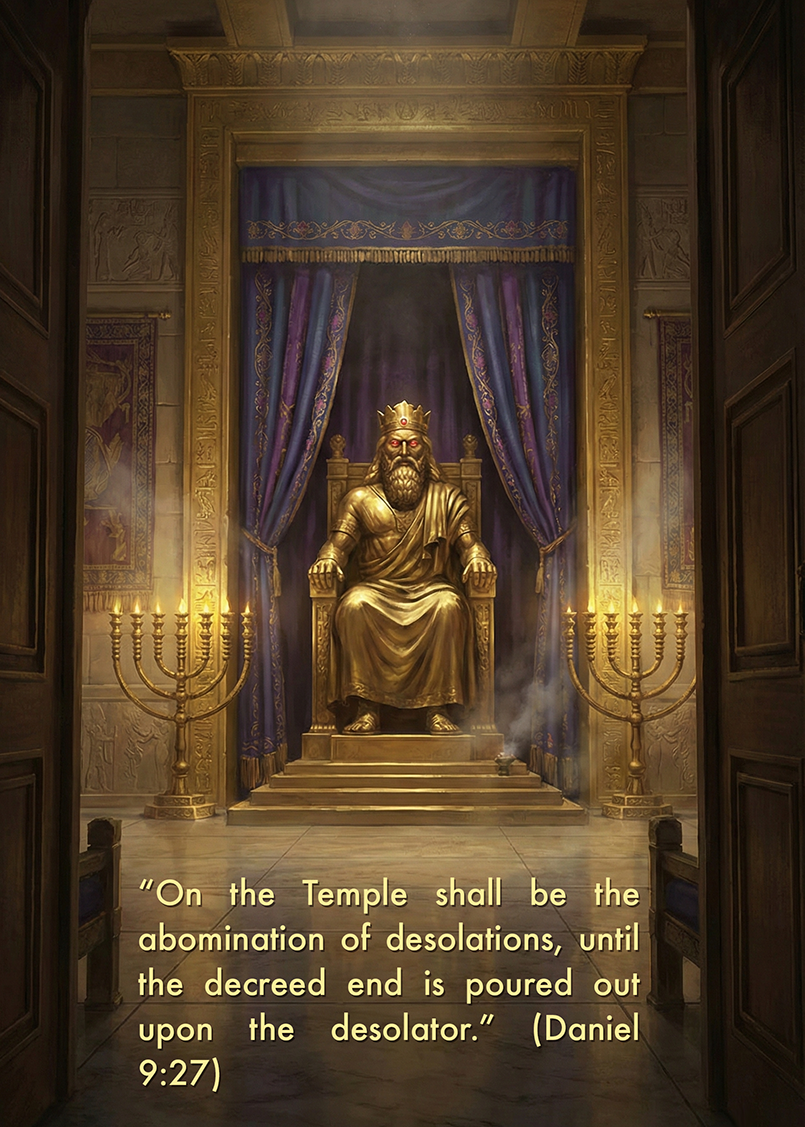
Daniel interprets the King’s dream of a massive statue, representing the sequence of secular human empires that oppose God. The parts are to be read chronologically, starting from the head and ending at the ground, where the stone (representing Yeshua) strikes the statue after descending from the heavens.
The legs of the statue represent the eastern and western divisions of the Roman Empire. An interesting thing about legs is that they dwindle to ankles, which are thin and lack muscle, yet are still part of the legs. By this we understand that the empire didn’t come to an end; it just changed shape.
The Roman Empire was not suddenly destroyed; rather, it gradually ebbed away over centuries. Even then, when its political power was spent and its borders fragmented, it morphed into a new form of authority: the Roman Catholic Church and the Greek Orthodox Church. These are empires without borders, and they continue to have many subjects today.
Modern Inheritances: Our current world is still functionally “Roman” in many sectors. For example:
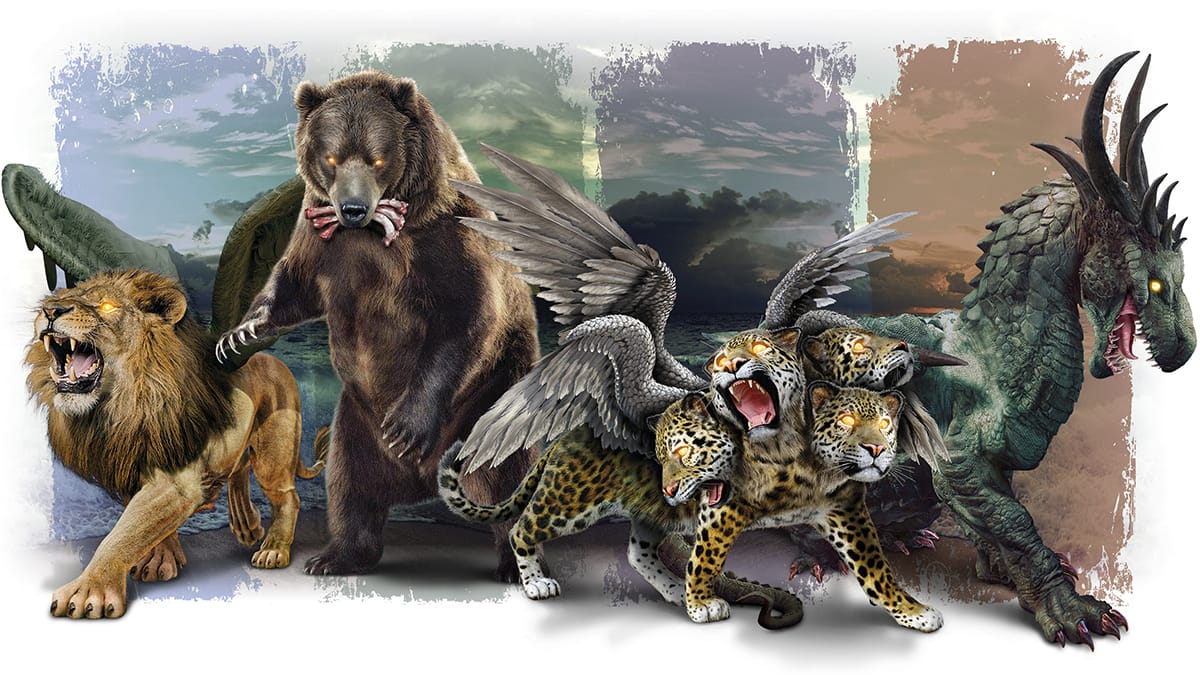
In the previous session, we discovered that Rome never fully died, and that it will experience reconstitution. As we’ll see from Daniel chapter 7, that will take place just before or during World War III.
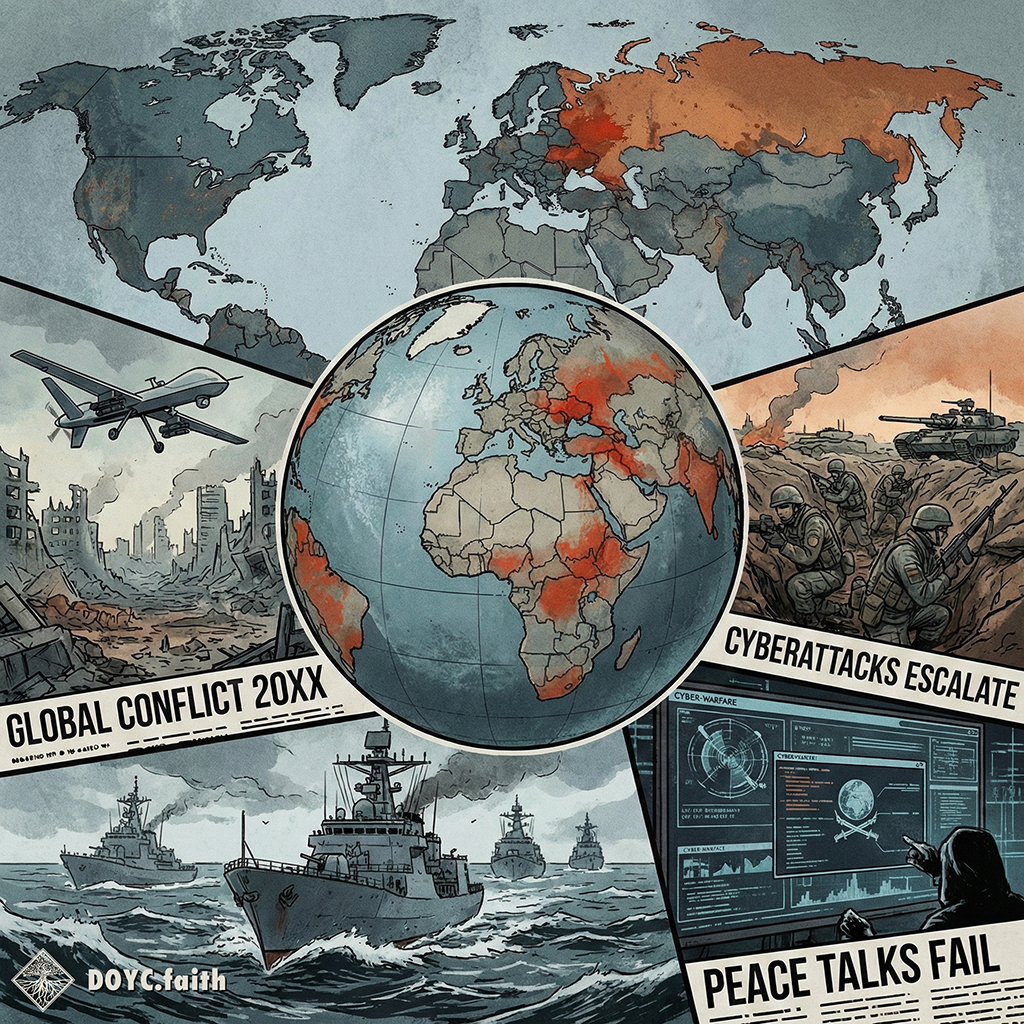
Daniel had a dream about four beasts striving upon the Great Sea. We aren’t told what they’re striving against, so they’re probably fighting each other (in other words, this is World War). These beasts are positioned on the Great Sea.
Despite traditional views on this subject, these four beasts are actually contemporaneous, not sequential. They represent global superpowers existing simultaneously at the end of the age because they are judged together and allowed to continue (sans authority) into the Messianic Age (Dan. 7:12).
The fact that the lion’s wings are plucked off means that the United States will be removed from superpower status.
After the U.S.A. is removed from the picture, the U.K. will experience a great awakening and turn to the Lord. She will no longer be a beast, because much of the nation and her leadership will become born-again Christians.
Russia, the bear, is already holding three ribs in its mouth prior to receiving the command to devour much flesh. This implies that she will take a bite out of the side of another beast kingdom some time before going on a rampage with WMDs. Considering current geopolitics, this will almost certainly be three nations on the eastern side of the European Union. The bear is also lifted up on one side. This is due to the imbalance of population density in Russia. (Elder Alexander received a word from the Lord about this, explaining that the vast majority of the population is clustered on the western side of the country.)
The leopard kingdom is a collection of nations that have not yet made an alliance. Be on the lookout for a powerful coalition of Asian countries east of the Tigris. Africa has leopards, but there is little chance of a powerhouse empire arising from Africa within the next few decades, so we should place our bets on Asia.
The ten horns of the dreadful (4th) beast must correspond to the ten toes on Nebuchadnezzar’s statue, because both the 4th beast and the feet of the statue represent the final secular superpowers of this Age.
The dreadful, fourth beast seen by Daniel has ten horns representing ten separate kings (likely from ten unified nation-states) who will work together to run the empire. However, there is one more horn who arises after the ten horns are already in place.
This session focuses on identifying the end-times role of Rome through the scriptural term Kittim, and exploring the animal symbolism found in ancient prophetic visions.
Revelation 13 presents a single beast rising from the sea, but this one beast is a chimera—a combination of the lion, bear, and leopard kingdoms from Daniel 7.
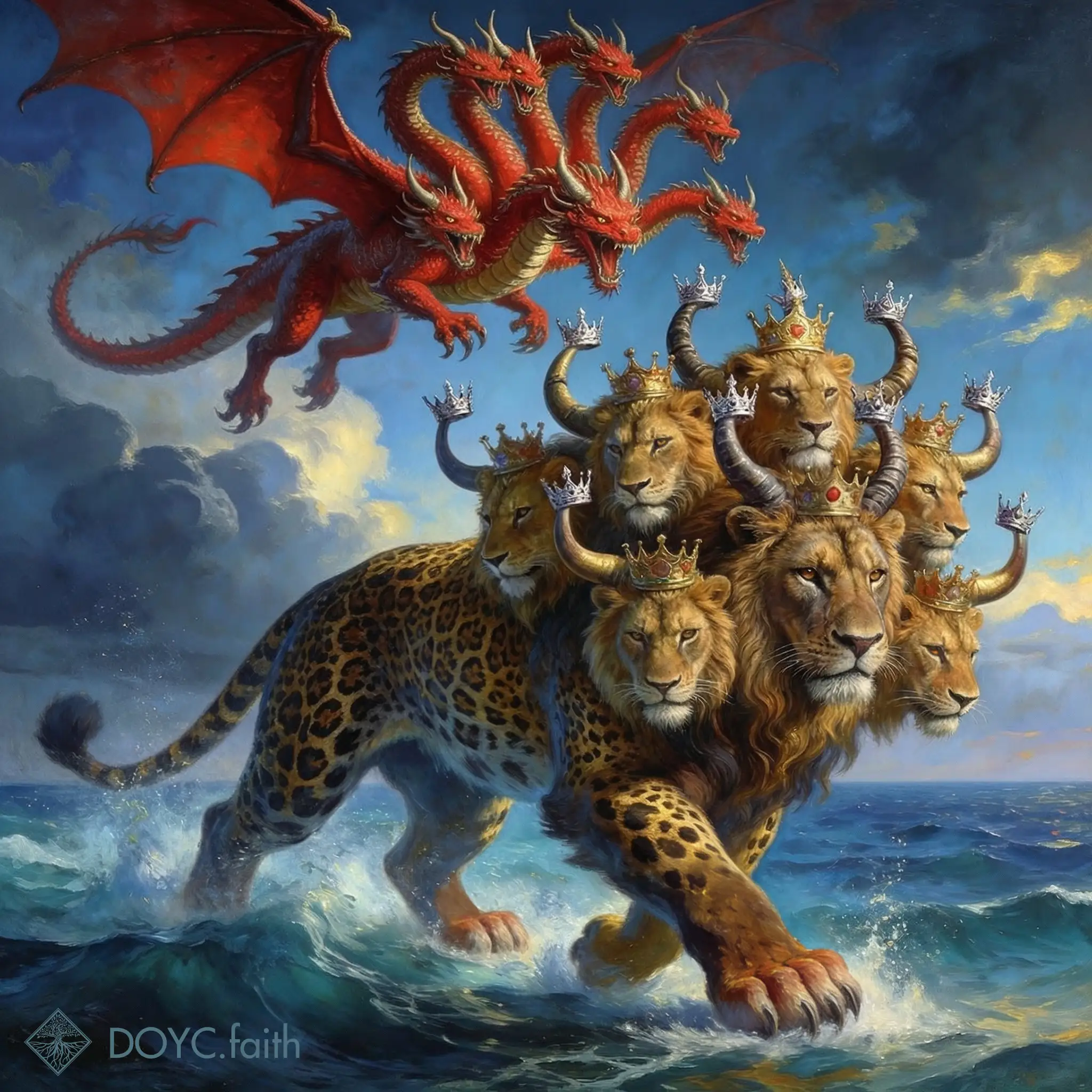
Beyond the fact that it incorporates parts of the Daniel 7 beasts, the chimeric beast of Rev. 13 has four important characteristics:
It is helpful to keep in mind that, since Babel fell, there have been 70 spiritual principalities ruling over the 70 Gentile people-groups.
Given this paradigm, there would have to be a Principality/Kosmokrater behind each of the seven heads of the terrible beast kingdom. Except…
It is perhaps better to imagine that these seven kings were not ruled by the properly assigned Kosmokrater who normally had control. Instead, perhaps Satan himself took charge in these instances. In that case, these kings were the seven world-ruling emperors that Satan personally possessed, and each of them were proudly antagonistic towards Yahweh. Each king hated God’s chosen people and tried to destroy them.
(The identities of these seven kings is partially open to debate, but Sennacherib of Assyria, Antiochus IV Epiphanes of Greece, and Nero of Rome would be a few strong contenders.)
In biblical prophecy, the Sons of Kittim represent the archetype of the “Other” from across the sea. They are the people of the ships, the people of the islands, and ultimately, the iron-shod legions of Rome that would change the course of Jewish history.

“Cethimus [Kittim] possessed the island Cethima: it is now called Cyprus; and from that it is that all islands, and the greatest part of the sea-coasts, are named Cethim by the Hebrews: and one city there is in Cyprus that has been able to preserve its denomination; it has been called Citius [Citium/Kition] by those who use the language of the Greeks.” — Antiquities 1.128
“Kittim: from whom come the Cypriots and the Rhodians… from whose name the city of Citium in Cyprus was also called.” — Hebraicae Quaestiones in Genesim (Commentary on Genesis)
“Wail, O ships of Tarshish, for Tyre is laid waste… from the land of Kittim it is revealed to them… Pass over to Kittim; even there you will have no rest.” — Isaiah 23:1, 12

This term occurs in the Qumran library, where Kittim is the primary title for the Roman legions.
The use of Kittim in other Second Temple texts reinforces its role as a symbol of Western imperial might.
The Apocrypha and Pseudepigrapha further identify the nature of the fourth kingdom.
The chimera beast kingdom of Revelation 13:1-8 is the final iteration of Kittim, which we call Rome. It started as an eagle, but it will become a conglomeration of beasts after dominating the three other global superpowers. We should not rejoice in Rome or want to be part of it; we should reject its ways.
In Revelation 17, we are presented with a startling scenario: the terrible beast from the sea is being ridden by a harlot. She has (temporarily) tamed the beast.
Whenever a woman is used as a symbol in the Bible, it nearly always signifies a religion or a city. In this case, Babylon is both.
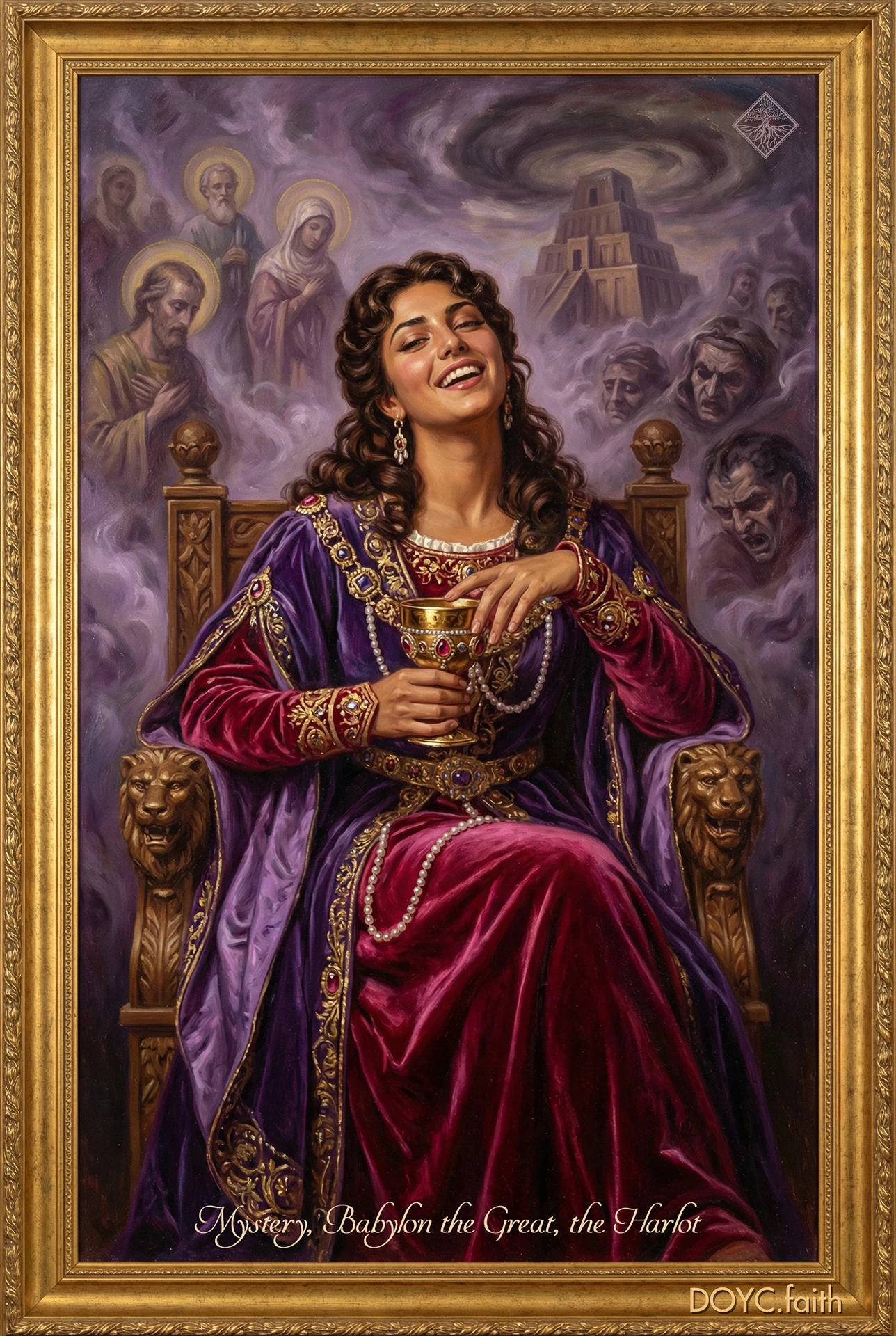
The mysterious woman is the idolatrous “harlot” system that persists from ancient Babel to the end of the Age. At Babel, humanity turned away from the Creator and embraced idol worship and the worship of the luminaries above.
The system attributed to the goddess Inanna (Ishtar) integrated spiritual authority with fiscal control to dominate the growing population of Mesopotamia in early history.
Prophecy presents a juxtaposition between the True King and the Impostor King, it also contrasts God’s city and the Enemy’s city.
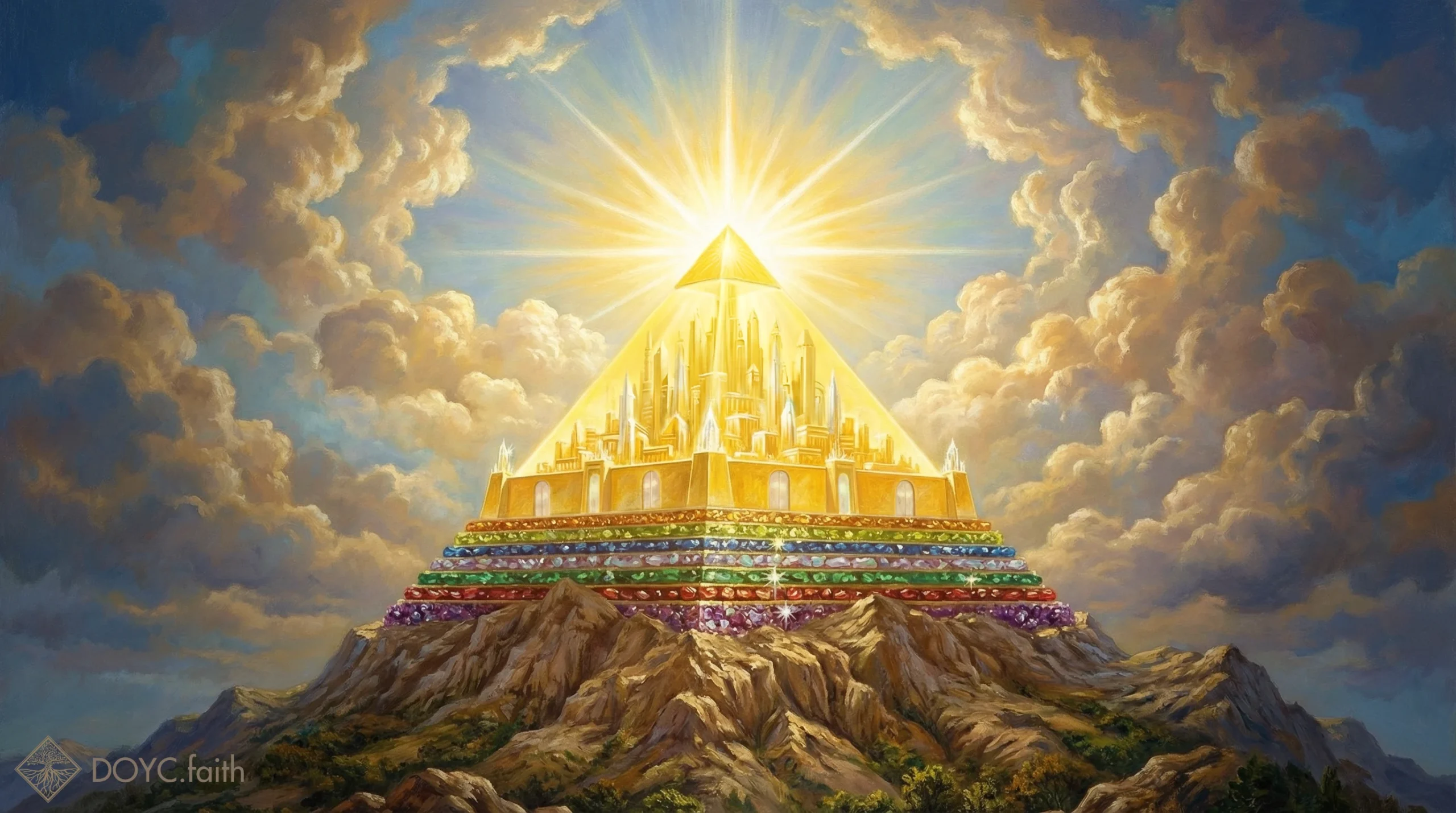
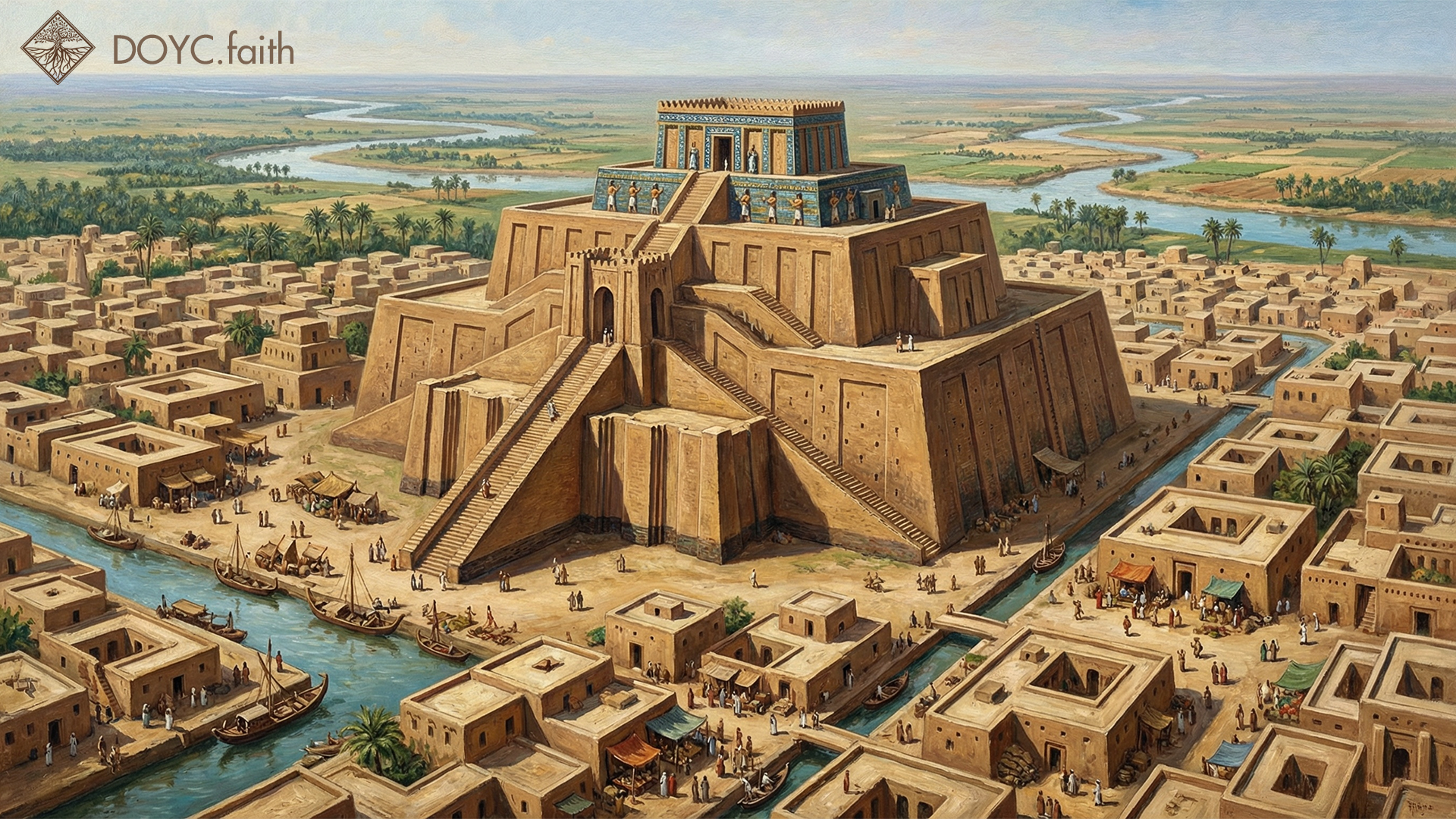
This session began with a recap of previous material before continuing with a breakdown of Mystery Babylon and the Beast that she rides. In Revelation 17:7-18, the angel speaking to John provides a specific interpretation for the beast carrying the woman. He says that understanding this will require wisdom, so we should first petition the Lord for wisdom before carefully inspecting the various elements of the angel’s commentary.
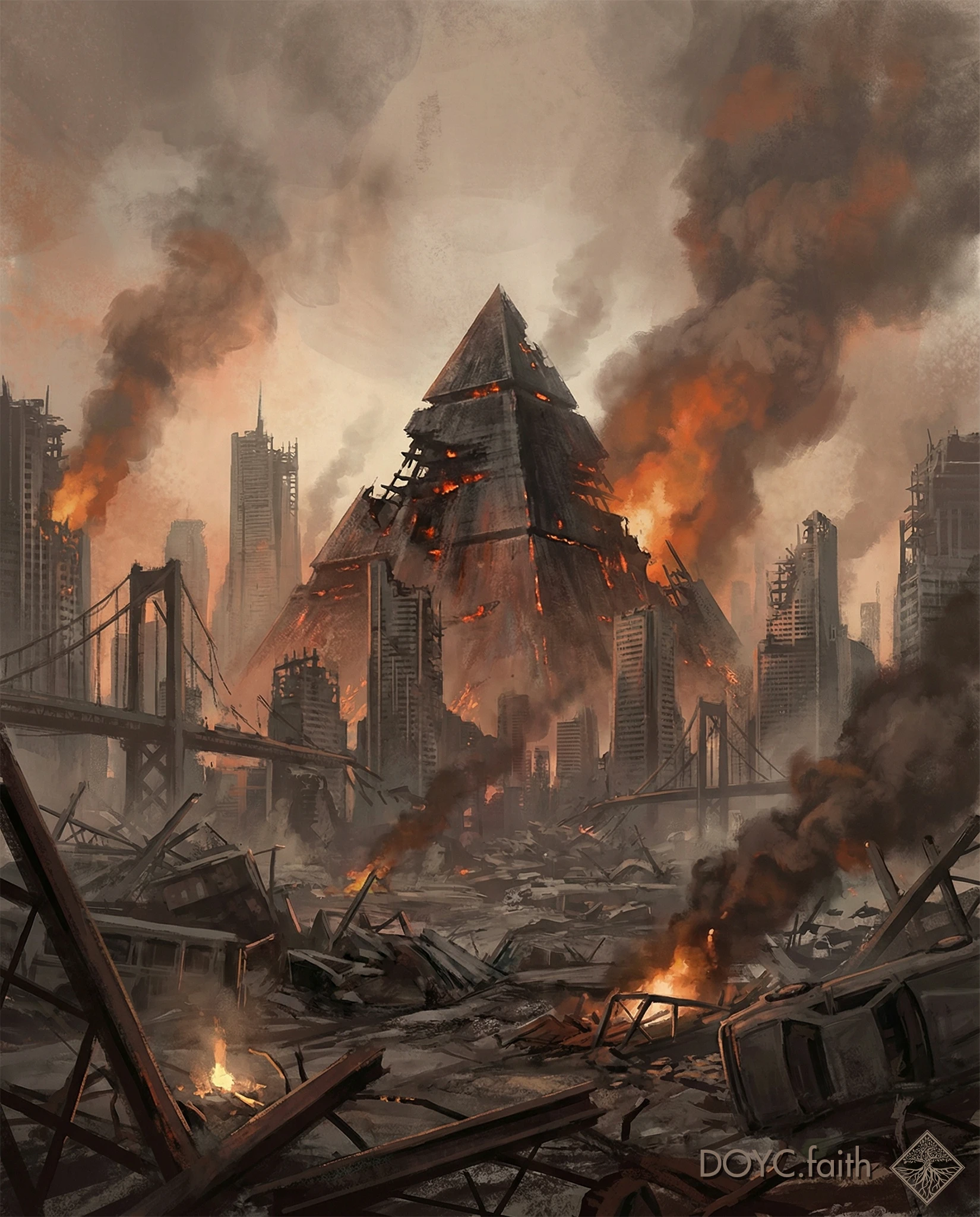
This session covers the oracle of Isaiah chapters 13 and 14, which foretell the destruction of Babylon and the fate of her king.
Isaiah wrote this oracle many decades before the Neo-Babylonians invaded Judah, destroyed Jerusalem, and took the Jews captive. Many theologians have therefore read the oracle as being fulfilled in 586 BC. However, the context of chapter 13 should clue us in to the fact that it is about events set to unfold at the end of the Age. The events 586 BC were merely a prevenient fulfillment (i.e., a foreshadow).
When attempting to understand the time setting of this oracle, consider the following:
Given these considerations, we have no choice but to treat Isaiah 13 & 14 as unfulfilled prophecy.
Isaiah 14 provides a “dirge” or taunt song (v. 4) against the end-times king of Babylon, highlighting his extreme hubris.
Since Lucifer, when correctly understood, is actually a title for the Antichrist, King of Babylon, we ought to stop using that as a name for Satan.
The King of Babylon attempts to storm the spirit realm through five specific declarations:
Recall what Daniel foretold about the “little horn” (i.e., the 11th horn), that it “waxed great even to the host of heaven; and it cast down some of the host and of the stars to the ground, and stamped upon them. Yea, he magnified himself even to the prince of the host…” (Dan. 8:10-11).
Frightening! This man will somehow be so powerful that he will pull down stars! He will plan to enter the spirit realm and take control of the cosmos. This goal harkens back to the original Tower of Babel, whose top was going to be “in the heavens” (Gen. 11:4). Concerning this, Yahweh said, “Behold, they are one people, and they have all one language, and this is only the beginning of what they will do. And nothing that they propose to do will now be impossible for them” (Gen. 11:6).
As incredible as it sounds, we must admit that the end-time King of Babylon will have the means—likely through arcane arts—to resume Babel’s initial mission and threaten the very heavens. Of course, as in the myth of Athtar, he will not succeed, which is the comforting promise of Isaiah’s prophetic taunt.
If we keep reading immediately beyond the taunt, we find that Yahweh swears to destroy “the Assyrian” in the Promised Land, and thereby rescue Israel from the enemy’s yoke. This is a thematic continuation of the beginning of the chapter, which foretells the reversal of Israel’s captivity. We should wonder, then: what is the connection between the King of Babylon and The Assyrian?
After declaring His future victory over Assur, Yahweh then explains that “this is the purpose that is purposed concerning the whole earth, and this is the hand that is stretched out over all the nations” (Isa. 14:26). This implies that Assur (or the Assyrians) will have scattered the Israelites across the world and put them under subjection in many nations, which, in turn, implies that Assur will have dominion over much of the earth. He must have that dominion in order to force the world to choose either the blasphemous Mark of the Beast or stand fast in the covenant of the Blood of Yeshua.
That being said, we have already established that Kittim/Rome, not Assyria, is the terrible beast that will dominate the world at the end of the Age. Rome is not the same as Assyria, although Rome did spread to control the same territory as Assyria. Nonetheless, the names are not synonymous.
Given that fact, we should operate under the theory that Assur in Isaiah 14:25 refers to the man, not the nation.
The next session provides more understanding of this man from a variety of scriptures.
The Antichrist is more than a simple, charismatic political figure or social revolutionary; he is an ancient entity whose return will shock the world.
The Beast first appears in Rev. 11:7, seemingly without any introduction, and is called “the beast that comes up out of the Abyss.” He bursts onto the scene after the Two Witnesses of God have been prophesying for 3.5 ‘times’ (roughly equivalent to years), makes war with them, and kills them.
However, it’s important to note that the Abyss is opened in Revelation ch. 9, and a king called Apollyon (“Destroyer”) emerges from it. Depending on whether or not you treat Revelation as chronological, this event may occur before the Two Witnesses. Could Apollyon be another term from the Beast?
It isn’t until chapter 17 that we again see an association between the Beast and the Abyss. An angel tells John, “The beast that you saw was [living], and is not [now living]; and is about to come up out of the Abyss and to go into destruction.”
Curiously, Revelation ch. 13 presents us with a slightly different picture. It says that the Beast comes up out of the sea rather than the Abyss.
Strangely, Revelation presents the Beast from the Sea and the Beast from the Abyss as one and the same. The link is made obvious primarily by the identical descriptions in 13:3 and 17:8. In biblical prophecy, kingdoms and their kings are often treated synonymously.
Revelation 13:3 describes one of the heads of the Beast as being slain by a sword and then healed. It is popular within Dispensationalism to teach that the Antichrist will receive a fatal head wound during his rise to power. That interpretation falls apart when we pay attention to the verbiage. By saying “one of his [seven] heads,” John is expressing that one of the seven historical kings of the Beast kingdom was killed in a way that left obvious and grievous wounds. The whole earth will be stunned that the king is brought back after receiving such damage—from weapons and from the passage of time. (Remember not to get the seven heads mixed up with the ten horns; it has both head-kings and horn-kings).
It is not uncommon among scholars to suggest that Isaiah 28:14–22 describes the same covenant as we read about Daniel 9:27 (where the Antichrist makes an agreement with many nations, seemingly on behalf of Israel). If so, it corroborates the idea that the Antichrist will rise from the dead, because Isaiah says that the covenant is made with death and hell.
“We have made a covenant with death, and with hell [Hebrew: She’ol] are we at agreement; when the overflowing scourge shall pass through, it shall not come unto us…. Therefore thus saith the Lord God, ‘Behold, I lay in Zion for a foundation a stone, a tried stone, a precious corner stone, a sure foundation: he that believeth shall not make haste. Judgment also will I lay to the line…. And your covenant with death shall be disannulled, and your agreement with hell [Hebrew: She’ol] shall not stand; when the overflowing scourge shall pass through, then ye shall be trodden down by it’…. Now therefore be ye not mockers, lest your bands be made strong: for I have heard from the Lord God of hosts a consumption, even determined upon the whole earth.” (Isaiah 28:14-22)
Whatever this “overflowing scourge” is, the entire earth will be subjected to it. The people of Judah will believe themselves protected from it because of their deal with someone who holds dominion over both death and the realm of the dead.
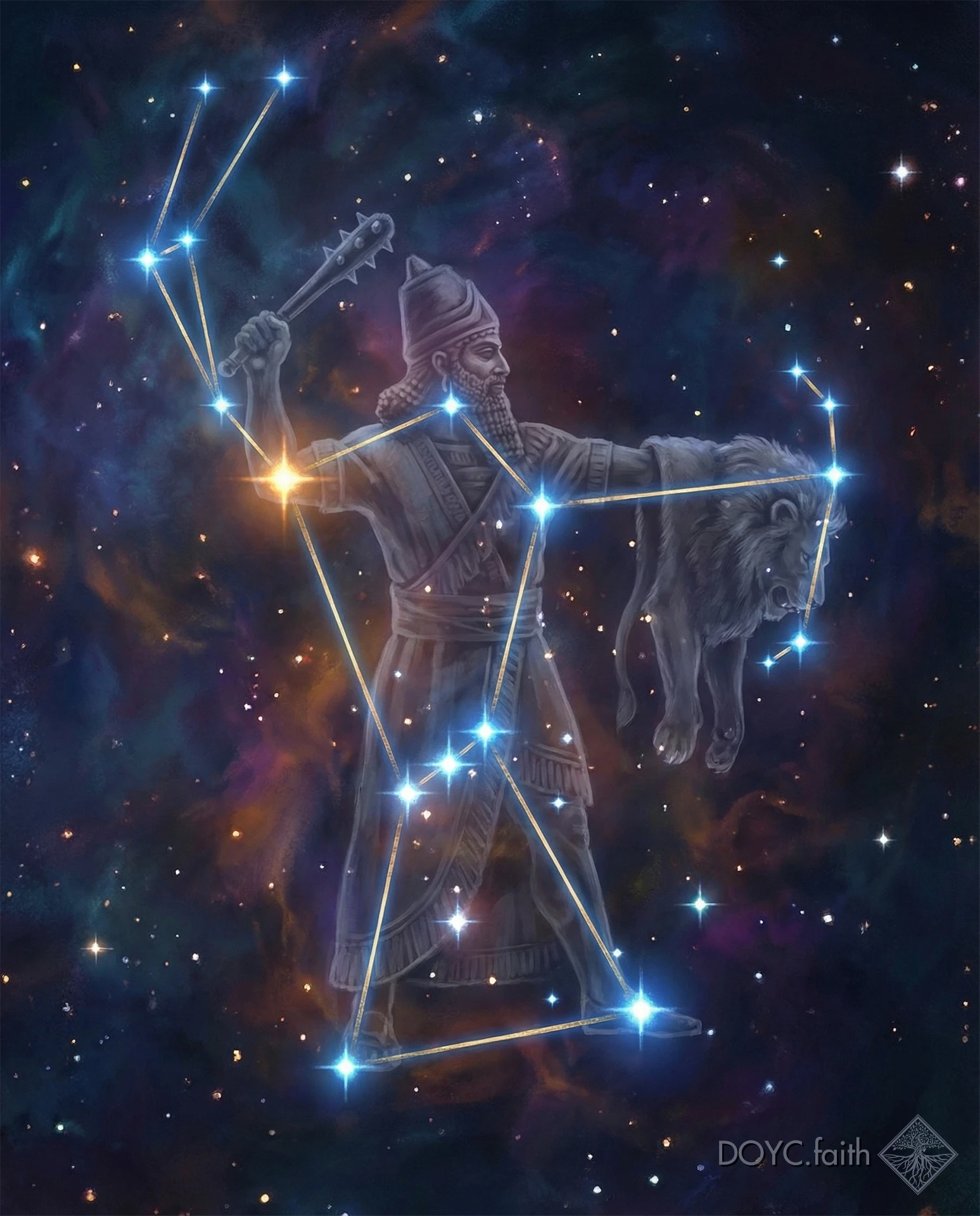
Historical researchers have long equated the Egyptian Osiris with the Assyrian Assur and the Babylonian Asar (Marduk), suggesting they all stem from a single original source in the Near East.
We’ve seen, thanks to Isaiah 14, how She’ol will receive the King of Babel; now we will look at prophecies that foretell the Antichrist’s death at the return of the real Christ.

It’s long been understood that many tunnels occupy the space beneath the Giza plateau, but we may just be discovering the scope of this underground world. Scans have recently verified massive columns and chambers beneath the Giza pyramids, matching ancient claims of a subterranean complex called Rostau.
Who did this? Who could have pulled off such a feat of engineering within the enormous limestone bedrock of Giza?
Astounding megalithic structures, scattered across the world, continue to defy conventional explanations. Despite their diverse placement, the structures share many similarities in their construction. In most cases, we do not understand the techniques that were used, even though we are supposedly more advanced than previous civilizations.
Many cultures around the world—from South America, to Africa, to Europe, tell stories that attribute megalithic structures to non‑local, “advanced” beings. For instance, in the Andes, some Indigenous oral traditions describe bearded foreigners arriving in a mysterious way in the distant past and teaching advanced stonework, or even building sites such as Tiwanaku, Puma Punku, and Cusco.
To make sense of the existence of these stories and the associated megalithic mysteries, we must understand that they were only made possible because of the Mysteries that came out of Babel (and, before that, from the fallen Watchers). The earliest post-Babel civilization was not primitive. In fact, due to the heavenly secrets that they possessed, they were in some ways more advanced than we are today.
More and more researchers are concluding that these structures were all built within a narrow window of history, as if by the same globe-spanning civilization. This conclusion is becoming more unavoidable by the week as ground-penetrating satellite scans reveal evidence of vast road networks and mighty cities buried not far beneath the surface of the earth, or submerged just off the coast.
The theory of an early, global civilization—advanced, yet with a total population in the millions, not billions—matches with the version of history presented in Ezekiel ch. 31, which teaches that Assur ruled an incomparable world empire that oversaw “all great nations” (v.6). When Assur was brought down to She’ol, all the nations quaked, and the rulers of nations fainted (vv. 15-16).
The Great Pyramids of Giza (and the subterranean complex beneath them) are the most famous and astounding feat of megalithic construction in the world. We should therefore pay close attention to the fact that the sizes and positions of the three pyramids mirror the three bright stars of Orion’s belt, one of the most easily recognizable groups of stars in the night sky. The Nile river that runs alongside the pyramids is meant to mirror the Milky Way above, which runs alongside the constellation Orion. This heaven-and-earth alignment scheme conforms to the occult mantra, “As above, so below.”
Finally, we return to the Olivet Discourse to make a more thorough survey. This was probably Yeshua’s last sermon, and it was certainly the most eschatalogical in nature.
Parallel accounts of the discourse: Matthew 24:1-51 = Mark 13:1-37 = Luke 21:5-38
Deceptions + Pre-Messianic Woes
The Persecution: Witness in the Fire
Betrayal by parents, brothers, and friends. But “by your endurance, you will gain your lives.”
The Abomination: The Historical/Prophetic Pivot
The Parousia: The Coming of the Son of Man
The Application: The Fig Tree and the Watchman
The Lord’s opening remark was a warning not to let ourselves be led astray, deceived. That has to be our ongoing highest priority. Seek and hold fast to the truth. In the armor of God, the belt of truth holds the outfit together. Without the truth, you’re going to lose all your protection.
B. The Birth Pains / Contractions
The progression of end-time events is described by Yeshua as “birth pains” (v. 24:8). As with the delivery of a baby, the pains grow closer together and more intense over time. These events align closely with the Seal Judgments of Revelation 6.
According to 2 Baruch 27, the birth pains of the end times are divided into 12 distinct aspects ranging from “commotions” and “death” to “attacks of the shediym (demons)” and “fire.”
Key takeaway: We are currently witnessing only the prelude or the very beginning of the contractions. The “consummation of the times” requires a crescendo to a global climax.
“The end” is the closure of the 6th millennium and the commencement of the Messianic Age (the 7th millennium). The scriptures call this “the Day of the Lord,” or sometimes simply “that Day.”
The Harvest: Yeshua defines the end as a harvest where angels (reapers) separate law-breakers from the righteous (Matt. 13:39-43). The parable of the harvest finds its fulfillment in Revelation 14:14-20.
Guarding the Heart: As lawlessness increases, the “love of many will grow cold.” We are called to hold fast to morality even when the world upends it, but at the same time, we must continue to have compassion for sinners.
The “Son of Man” Title: Yeshua utilized this title to signal His identity as the Cosmic Judge.
In the Book of Enoch (written pre-Flood, and understood as the first scripture), the Son of Man is portrayed as:
Pre-existent: Named before the Lord of Spirits even before the stars were created.
Overthrower of Tyrants: One who overturns kings from their thrones for failing to acknowledge the source of their power.
Staff of the Righteous: A staff for the faithful and the “Light of the Nations”.
He Comes in Judgment: Anyone familiar with Enoch would have understood the implications when Yeshua said during the Olivet Discourse, “Then will appear in heaven the sign of the Son of Man, and then all the tribes of the earth will mourn, and they will see the Son of Man coming on the clouds of heaven with power and great glory.”
A contextual challenge to Premillennialism is found in Mark 13:30/Matthew 24:34 (“This generation will not pass away…”).
Linguistic Context: The Greek genea may mask deeper Semitic meanings. In Hebrew (dor) or Aramaic (sharbtha), the phrase can refer to a race of people or a specific era of rebellion. Yeshua wasn’t necessarily referring to the particular generation of people listening to him speak.
The Fig Tree Symbol: Likely represents Judah or specifically the Levites.
As we see the Levites revive the Temple and the practices of the earthly priesthood, and we witness many Jewish people embracing the way of Torah again, we can be sure that the leaves of the proverbial tree are becoming tender, and the time is near.
When Yeshua said “this generation shall not pass away until all is completed,” he was likely referring to the generation that would witness the fig leaves become tender.
The Promise: Despite the “Great Tribulation” following the Abomination of Desolation, Yeshua promises that Israel as a people will be preserved until His return. There is comfort in knowing that the end of the Age won’t spell out the end of the Hebrew people.
Eschatology is effectively the “Holy Calendar” written in the future tense. The seven festivals in Leviticus 23 are God’s divine appointments, His master plan for redemption.

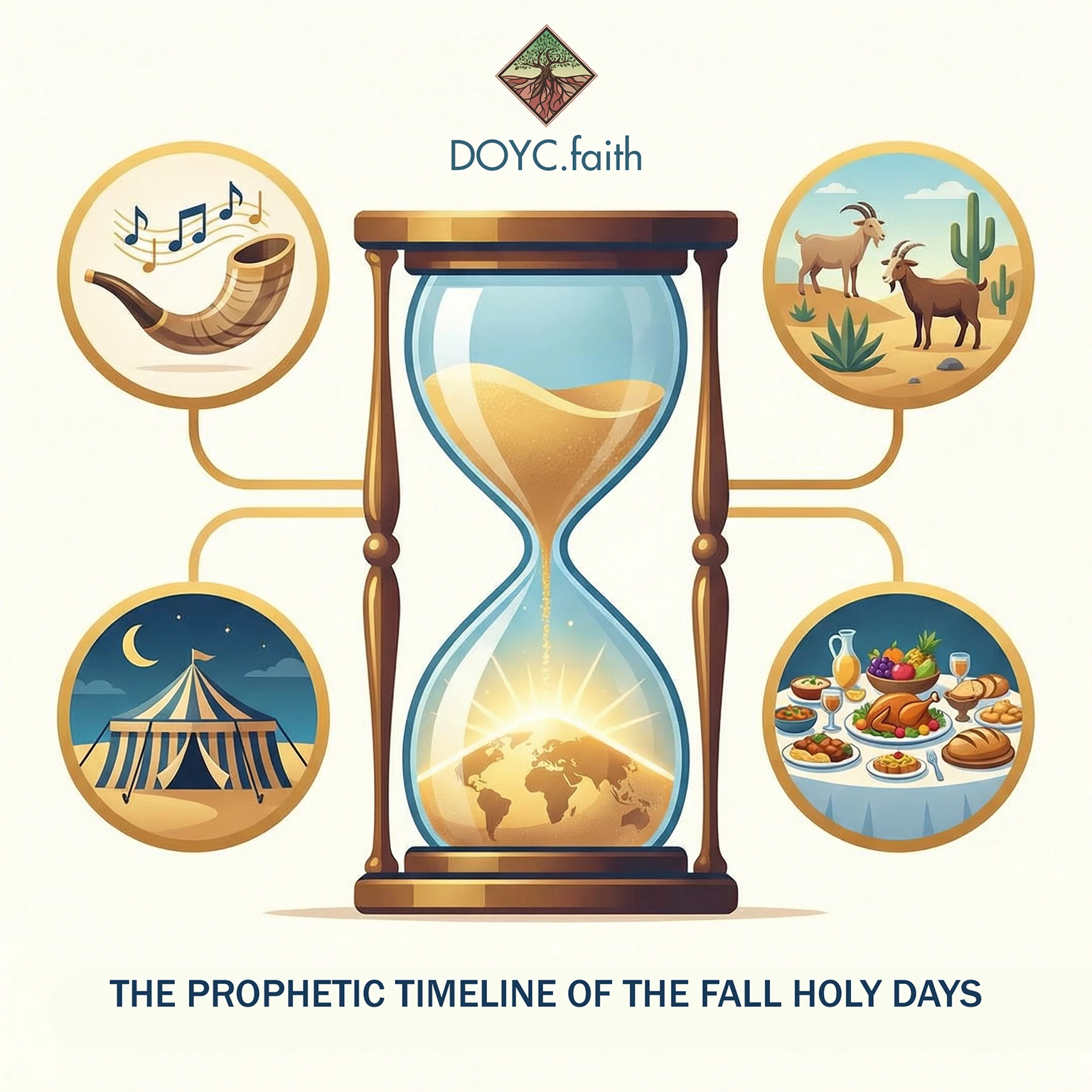
The numbers in Daniel and Revelation are not arbitrary; they are liturgical intervals: